

Why Brokers Are Asking for Infusion Carve-Outs Now?

By Jake Velie, Chairman & CEO, National Integrative Health
When brokers start raising infusion carve-outs in renewal conversations, it is a sign that the old approach to medical-benefit drug spend is under pressure.
This is not a labeling exercise. It is about cost, accountability, and control.
In one recent NIH case, a broker managing over 70 self-funded groups asked whether an infusion carve-out could be put in place for a 10/1 renewal after reviewing claims that included Keytruda and other J and Q codes.¹ (Source note: Internal NIH case notes.) In another July case, a broker requested a deeper repricing analysis focused on site-of-care adjustments and Cyramza.² (Source note: NIH case notes on site-of-care repricing.) Those cases matter, not because two anecdotes prove a trend, but because they reflect where sophisticated intermediaries are starting to focus.
They are looking harder at provider-administered drugs billed through the medical benefit. They are asking what the plan actually paid. They are questioning whether the hospital outpatient department was the right setting. And they are recognizing that a standard renewal conversation does not answer those questions well enough.
What an infusion carve-out means in practice
An infusion carve-out is not a solution by itself, and it is not automatically the right answer.
At a practical level, it usually means separating some portion of infused and injected drug management from the default medical-claim workflow so the plan can evaluate a different mix of site of care, sourcing, prior authorization, clinical review, and network strategy. The point is not the carve-out itself. The point is to stop treating every infused claim as if its current pathway must be accepted.
That distinction matters.
Too many employers still approach infusions as though the only variable is the drug. In reality, the economics are shaped by at least four moving parts: the therapy selected, the place of service, the reimbursement structure, and the discipline of the people managing the claim. When those four variables go unmanaged, high-cost cases consistently flow to the most expensive channel.
Why brokers are raising this now
The broader specialty market is already telling employers that high-cost drug management cannot be treated as a rebate exercise. In PSG’s latest specialty trend discussion, gross specialty spend grew 10.8 percent in 2025 while cost per claim was nearly flat at 0.1 percent. Utilization grew 10.6 percent.³ (Source note: PSG specialty trend findings.) More members are using more high-cost therapies, across more conditions, for longer periods of time.
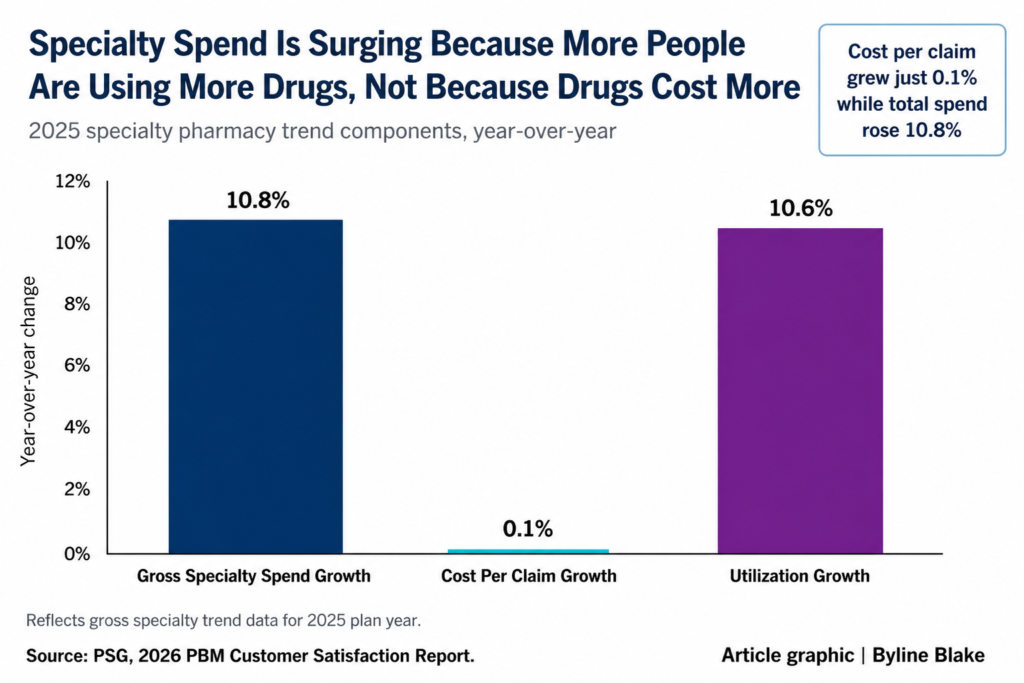
Figure 1: Specialty Spend Is Surging Because More People Are Using More Drugs, Not Because Drugs Cost More
That utilization dynamic is especially important in the infusion setting.
Once more high-cost therapies move through the medical benefit, the site of care starts to matter significantly. Magellan Rx Management has cited research showing that shifting infusions from hospital outpatient departments to clinically appropriate lower-cost settings such as physician offices, ambulatory infusion centers, or home infusion can reduce administration costs by 40 to 60 percent.⁴ (Source note: Magellan site-of-care optimization research.) That does not mean every infusion belongs outside the hospital. It does mean every routine case deserves scrutiny.
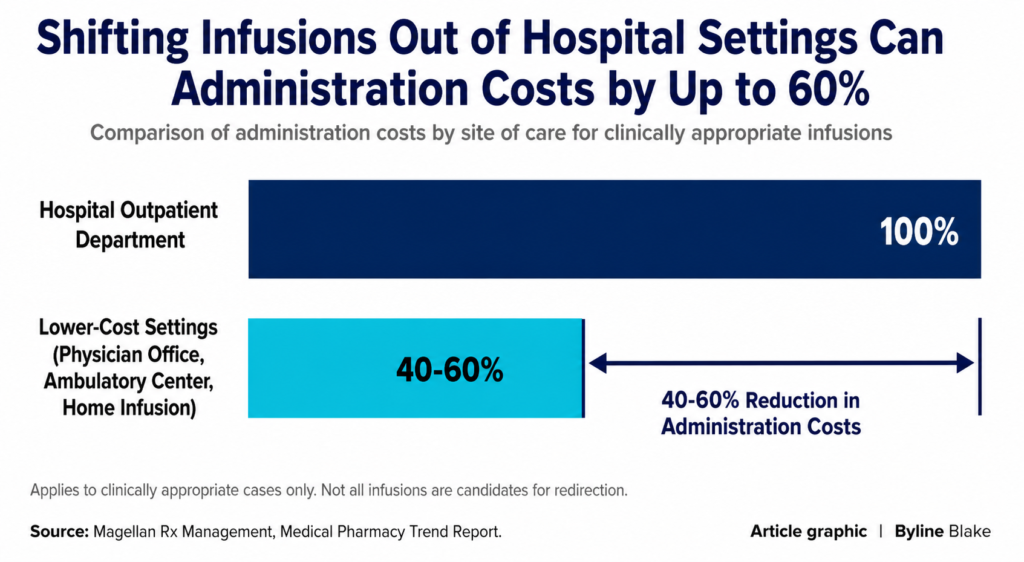
Figure 2: Shifting Infusions Out of Hospital Settings Can Cut Administration Costs by Up to 60%
That is why brokers are asking harder questions. They are seeing the same thing employers are seeing in their claims experience: infused drug spend is not something you can review once a year and set aside.
The problem is not just price. It is process.
The structural problem for many plans is that they do not have a clean answer to a simple question: who is responsible for proving that a high-cost infused claim was routed through the lowest reasonable net-cost path?
The PBM may not own it if the drug is billed through the medical benefit. The TPA may process the claim correctly without knowing to challenge the site. The broker may spot the problem without being aware how to operate the fix. The hospital has no reason to volunteer a lower-cost setting if the current one pays well.
That leaves the plan sponsor holding the financial risk and, increasingly, the governance burden. As the U.S. Department of Labor and Employee Benefits Security Administration continue to press for greater health-plan transparency and accountability, employers should assume they need a clearer record of how high-cost pharmacy-related claims are being evaluated and managed.⁵ (Source note: DOL and EBSA guidance on oversight and accountability.)
This is why infusion carve-out conversations keep reaching the renewal table. They are often less about replacing a vendor and more about creating a process that does not depend on passive default behavior.
What plan sponsors should evaluate before making a decision
A sound infusion strategy starts with diligence, not positioning.
Before a plan sponsor embraces or rejects a carve-out, there are several practical questions worth answering:
- Which infused and injected therapies are driving the highest paid amounts today?
- How much of that spend is occurring in hospital outpatient departments versus lower-cost alternative settings?
- For the largest claims, does the plan know the true net paid amount after all credits, refunds, and adjustments?
- Which cases are clinically appropriate for redirection, and which are not?
- Is the plan evaluating biosimilars, site-of-care changes, and other cost levers together, or one at a time?
- Who is documenting the rationale for the path chosen on the largest claims?
That is the conversation self-funded employers should be having.
A plan does not need an ideological view of carve-outs. It needs a disciplined view of whether the current structure is producing defensible outcomes.
What gets lost when this becomes a vendor conversation
The industry tends to turn real operating problems into marketing categories.
The important issue is not whether an employer adopts a vendor’s preferred label. The important issue is whether the employer can demonstrate that it understands where infused drug spend is landing, why it is landing there, and what alternatives were considered.
If a carve-out helps create that discipline, it is worth considering. If the same discipline can be achieved through other means, that is equally valid. But inaction is no longer a defensible position.
When high-cost infused claims continue to flow into expensive settings without a documented challenge process, the plan is not managing the trend. It is absorbing it.
What employers should do next
Do not wait until the next renewal to get clarity on infused drug spend.
Pull the high-cost claims. Identify the sites of care. Reconcile the true net paid amounts. Review which therapies could have been managed differently. Make sure someone can explain, in writing, why the current pathway was used on the largest cases.
Infusion carve-outs are getting attention because employers are finally confronting a simple reality: hospital-based drug administration is not just a clinical event. It is a purchasing decision, a network decision, and a governance decision.
The plans that take that seriously will be in a much better position than those still treating infused drug spend as an unavoidable cost of doing business.
Jake Velie is Chairman & CEO of National Integrative Health, a managed services organization headquartered in West Des Moines, Iowa, focused on prescription drug cost optimization for self-funded employer health plans.
Footnotes
- Internal NIH case notes describe a broker with 70 groups seeking an infusion carve-out for a 10/1 renewing group after review of claims including Keytruda and other J/Q codes.12
- NIH case notes describe a broker request for deeper analysis of site-of-care adjustments and Cyramza repricing.
- PSG, 2026 Pharmacy Benefit Manager Customer Satisfaction Report. Internal notes summarizing 2025 specialty trend findings: gross specialty spend grew 10.8%, cost per claim was nearly flat at 0.1%, and utilization grew 10.6%.
- Magellan Rx Management, Medical Pharmacy Trend Report: Site of Care Optimization. Shifting clinically appropriate infusions from hospital outpatient departments to lower-cost settings can reduce administration costs by 40 to 60 percent.
- U.S. Department of Labor, Employee Benefits Security Administration. Used here to support the employer-accountability and documentation framework for pharmacy-related spend oversight.