Welcoming David Sherman as Chief Revenue Officer to the HVBA

Welcoming David Sherman as Chief Revenue Officer to the HVBA

Welcoming David Sherman as Chief Revenue Officer to the HVBA

Mount Laurel, NJ – January 20, 2025 – We’re happy to announce that David Sherman has joined the Health & Voluntary Benefits Association® (HVBA) as our Chief Revenue Officer. 

Dave brings over 40 years of expertise in the employee benefits industry, specializing in designing, enrolling, and administering comprehensive benefit programs.

“We’re excited to welcome Dave onto the HVBA team, and I know he is bringing important skills and knowledge to help us reach the next level,” says Rob Shestack, HVBA Chairman and CEO. “He’s an outstanding leader and teammate and will be a big part of our next growth phase.”

Sherman joins HVBA’s Executive Board after a year-long commitment to the Advisory Board. During that time, he stood out for his deep experience in growing companies smartly and sustainably and his passion for HVBA’s mission to improve the health of its partners and their teams by sharing proven strategies and success stories of employee benefits and healthcare solutions.

“I am thrilled to join HVBA as Chief Revenue Officer and am eager to focus on optimizing revenue streams, enhancing operational efficiencies, and driving sustainable growth. I look forward to collaborating with the team to create impactful strategies that deliver measurable results and elevate HVBA’s position in the industry,” said Dave Sherman.

Sherman currently serves as the Director of Channel and Partnerships at PTO Exchange. 

Before joining PTO Exchange in 2021, Dave founded and led Preferred Benefit Solutions, a national consulting firm specializing in innovative benefit programs. He worked closely with early-stage startups, guiding their growth and collaborating with industry-leading platforms to deliver tailored solutions, including pharmacy analytics, financial wellness initiatives, and lifestyle benefits. 

By leveraging his extensive experience and passion, Dave brings tremendous value. He will help oversee the customer-facing side of the business, building diverse routes to market, developing customer support systems, and positioning the company’s offerings to drive growth with new markets and client segments. 

Press Contact:

Sarah Hunt
Senior Vice President of Administration
shunt@vbassociation.com

Health & Voluntary Benefits Association® (HVBA) Celebrates Leadership at 17th Annual Board Meeting and Benefits Roadshow in Philadelphia

Camden, NJ – December 20, 2024 – The Health & Voluntary Benefits Association® (HVBA) concluded its 17th Annual Board Meeting and Benefits Roadshow in Philadelphia on November 21, 2024. The event was marked by strategic planning sessions to enhance member and corporate partner experiences, showcasing a commitment to staying at the forefront of the industry.
The meeting provided a dynamic platform for exchanging innovative ideas, fostering collaboration, and unparalleled business networking opportunities that left attendees enthused about the Association’s future direction. The HVBA remains a trailblazer in the health and voluntary benefits sector, primarily focusing on delivering education, news, and the most up-to-date information and resources to its subscribers and members while connecting with its community through networking and innovative partnerships.

Among the event’s highlights were the acknowledgments and honors awarded to outstanding partners and board members who have pivotal roles in elevating the Association’s stature and creating valuable experiences for current and future members.

2024 HVBA Leadership Award Sponsor

We sincerely thank Aflac for sponsoring this year’s award ceremony, Leadership awards, and Hall of Fame award.

The Health & Voluntary Benefits Association® (HVBA) is pleased to recognize the following professionals for their exceptional contributions during 2024:
Rob Shestack, Chairman & CEO of the HVBA, praises these award recipients: “These exceptional individuals have played a pivotal role in HVBA’s growth throughout 2024, fostering enhanced collaboration and networking opportunities for members, corporate sponsors, and partners. A heartfelt congratulations to Don Cahalan on his induction into the HVBA Hall of Fame, joining an esteemed group of industry leaders.”

Mike Hirschberg shared his gratitude, saying: “On behalf of MassMutual, I am thrilled to accept the award of Sponsor of The Year from the HVBA.  MassMutual is a proud sponsor of the HVBA and their mission to raise awareness of the advantages of Health and Voluntary Benefits have for employees and employers alike.”

As we celebrate the achievements of 2024, the Health & Voluntary Benefits Association® (HVBA) eagerly anticipates the opportunities that 2025 will bring. We remain dedicated to excellence and take pride in honoring the hardworking efforts of our board and team members in the year ahead.
Click here to learn more about HVBA’s Annual Leadership Awards, including past recipients, eligibility, and award sponsorship opportunities.

For more information about the Health & Voluntary Benefits Association® (HVBA) and its initiatives, please visit www.vbassociation.com.

About Health & Voluntary Benefits Association® (HVBA): The Health & Voluntary Benefits Association® (HVBA) is a leading organization that provides valuable resources, networking opportunities, and the latest health and voluntary benefits sector information. Comprised of a diverse group of professionals, the association is committed to elevating industry standards and fostering collaboration among its members, corporate sponsors, and partners.

Press Contact:
Sarah Hunt
Senior Vice President of Administration
shunt@vbassociation.com

2024 In Review: State Telehealth Policy – Legislative Roundup

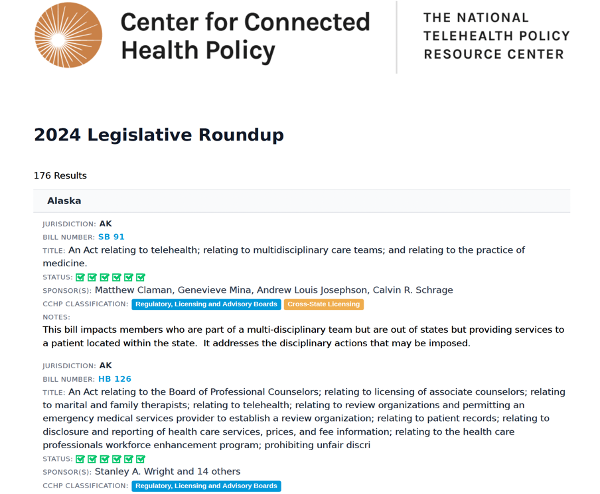
As 2024 draws to a close, the Center for Connected Health Policy (CCHP) is releasing its annual roundup of state telehealth legislation. This year, state legislatures continued to refine, expand, and impose new standards on telehealth, responding to evolving needs in healthcare delivery and leveraging lessons learned from the COVID-19 pandemic. Notably, increasingly specific requirements for various telehealth modalities, including remote patient monitoring and audio-only services, demonstrate states’ efforts to ensure telehealth remains accessible and aligns with high standards of care.

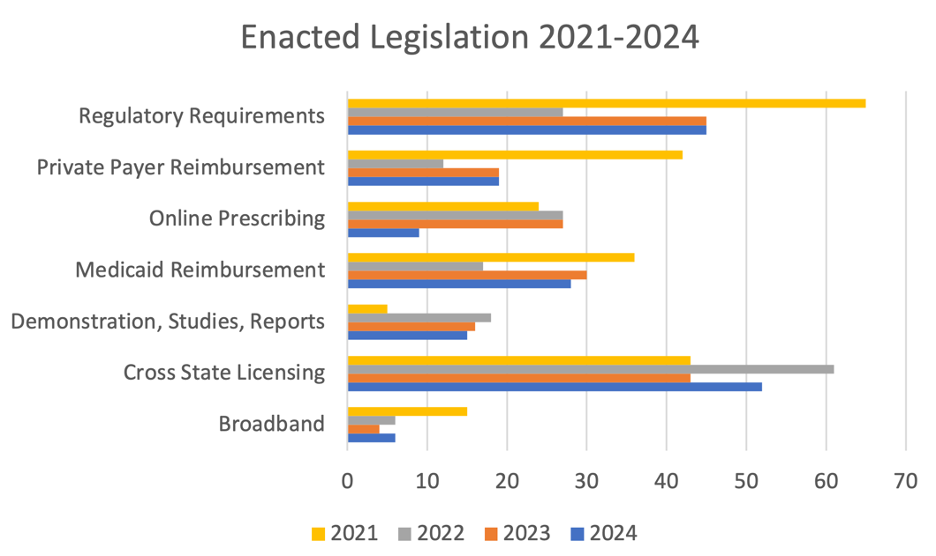
In the 2024 session, CCHP found that 41 states and the District of Columbia introduced telehealth-related legislation.  In total, there were 176 enacted legislative bills in the 2024 session, slightly up from the 171 legislative bills last year (2023), marking continued, yet measured, interest in telehealth policy. Bills addressing cross-state licensing had the most significant increase among those passed. Every other category tracked by CCHP remained mostly steady compared to the previous year, including legislation targeting telehealth for Medicaid and private payers.  As states confront issues like digital equity, licensure flexibility, and healthcare access, telehealth remains a critical focus of state legislative efforts, showcasing its growing role in the healthcare landscape.

This image has an empty alt attribute; its file name is Enacted-Leg-2021-2024.png

CCHP’s 2024 roundup of approved state legislation, complete with detailed bill summaries by topic area and state, is now available. Below, you’ll find in-depth summaries for each key area in telehealth legislation this year.

MEDICAID REIMBURSEMENT
In 2024, CCHP tracked 28 state bills related to Medicaid reimbursement that were enacted, marking a slight decrease from 2023, when 30 such bills were passed.  States continued to expand Medicaid coverage for a variety of healthcare services offered via telehealth, including new categories of healthcare providers and services eligible for reimbursement.  Kentucky’s SB 111, for example, included speech therapy as a covered service, making it available for in-person or telehealth delivery under Medicaid. By adding these services, states are working to fill gaps in care through telehealth and increase access for Medicaid recipients. Some states took additional steps to broaden the scope of Medicaid-covered telehealth services to specific populations. Colorado’s HB 24-1045, for instance, added substance use disorder (SUD) treatment to the definition of a health-care or mental health-care service in the state’s Medicaid telemedicine statute, effectively requiring the services to be reimbursed at the same rate as in-person care. It also stipulates that Medicaid may provide reimbursement to a behavioral health facility that serves as the originating site at the time of the service.  This focus on mental health and substance use disorder treatment reflects a wider trend among states to expand access to behavioral health care through telehealth.


Certain states have underscored the importance of supporting Federally Qualified Health Centers (FQHCs) and Rural Health Clinics (RHCs) by enabling them to serve as both originating and distant sites for telehealth. Mississippi’s HB 970 reinforced this approach by ensuring that FQHCs, RHCs, and Community Mental Health Centers (CMHCs) are eligible for Medicaid reimbursement when providing telehealth services at both ends of the interaction.  Michigan’s HB 4213, likewise, specifies that a telemedicine service is an allowable encounter for an FQHC, RHC, or tribal health center in the medical assistance program.

Several states have taken strides to ensure Medicaid payment parity, requiring reimbursement for telehealth services at levels comparable (or the same) to in-person services. In the 2024 session, Michigan SB 747 mandated payment parity within the state’s Medicaid program, guaranteeing that behavioral and physical health services delivered via telehealth would be reimbursed at the same rate as face-to-face encounters.

In previous years, audio-only services saw significant expansion across Medicaid programs, but with most programs now reimbursing this modality, the focus has shifted. In 2024, legislation more frequently addressed reimbursement for remote patient monitoring (RPM), highlighting the growing emphasis on supporting advanced telehealth technologies.  For example, Louisiana Medicaid is now required by HB 896 to cover a one-time installation and training reimbursement for RPM services, as well as coverage for assessment and monitoring of clinical data for patients that meet certain criteria.  Some Medicaid programs also focused in on diabetes, and continuous glucose monitoring.  Colorado’s SB 24-168, for example, established a grant program to support remote monitoring in rural and underserved areas, while also requiring Medicaid coverage for continuous glucose monitors. Other states, addressed reimbursement of remote ultrasounds and non-stress tests used in maternal care.  For instance, in Maryland, HB 1078 mandated Medicaid coverage for remote fetal non-stress tests and ultrasound procedures. These additions indicate an ongoing trend of states leveraging telehealth technology to improve healthcare access for individuals with chronic or complex medical needs, ensuring that telehealth can meet the diverse and evolving demands of Medicaid populations.

PRIVATE PAYER REIMBURSEMENT
This year, CCHP tracked 19 state bills addressing telehealth private payer reimbursement that were enacted, equalling 2023 when 19 such bills were passed.  Pennsylvania passed a private payer law for the first time, SB 739, which mandates that health insurance policies must cover telehealth services provided by a network provider, and may not deny coverage solely because the service took place by telemedicine.  Payment cannot be conditioned on the use of a specific proprietary telemedicine technology or vendor.

In 2024, a few states also enacted legislation to ensure telehealth parity, requiring private insurers to cover and reimburse telehealth services comparable to in-person care. Michigan’s HB 4579 mandated coverage parity and established that health plans cannot restrict telehealth services to be delivered exclusively through third-party entities, thereby preserving provider autonomy and expanding patient choice. Seeking to provide continuity with COVID-19 pandemic policies and avoid a sudden change in telehealth reimbursement, Connecticut’s HB 5198 made some pandemic-era telehealth policies permanent, including private payer payment parity, and New York’s S 8307extended telehealth reimbursement parity requirements until April 2026.

PROFESSIONAL PRACTICE REQUIREMENTS 
This year, 45 enacted bills dealt with professional requirements around telehealth (which remained steady with 2023, which also had 45 enacted bills dealing with professional requirements).  Often, laws explicitly state that specific types of healthcare professionals are permitted to deliver services via telehealth to eliminate any ambiguity that could arise from the absence of clear guidance. Alaska’s HB 126, for example, authorized associate counselors to provide services via telehealth, as long as they are located at an eligible clinic, facility, or private office and the provider is acting within their scope of responsibilities. Illinois addressed additional areas, such as physical therapy with HB 5087. Kentucky’s SB 255 introduced social work telehealth standards, detailing practice requirements to uphold professional integrity across telehealth services, and New Hampshire’s SB 403 authorized certified community health workers to provide telemedicine services. By establishing these standards, states are ensuring that telehealth remains a reliable and high-quality option for patients across diverse fields.

In the veterinary field, telehealth standards were reinforced and expanded. Colorado’s HB 24-1048 permitted telehealth for veterinary services, while mandating an in-person examination to establish a veterinarian-client-patient relationship, subsequently allowing other veterinarians at the same physical premises to participate in telehealth services under the established relationship. Similarly, Florida’s HB 849 addressed veterinary telehealth, outlining appropriate practice requirements. These measures reflect a shift towards telehealth in veterinary care, ensuring that telehealth is integrated responsibly while maintaining quality of care.

PRESCRIBING
Nine enacted pieces of legislation specifically focused on online prescribing requirements in the 2024 legislative session. Often, these prescribing requirements were integrated into broader telehealth professional standards, resulting in overlap; 3 bills addressed both online prescribing and professional standards simultaneously.  An example is Tennessee’s SB 2136, which established guidelines for physicians collaborating with physician assistants in a remote healthcare setting, and within the guidelines specifically addressing prescribing protocols.

Additionally, Delaware’s SB 331 addressed out-of-state practitioners prescribing controlled substances, requiring these providers to obtain a Delaware-controlled substance registration and hold appropriate state licensure. The bill specifies that licensure can be obtained through various options, including an interstate compact or interstate telehealth registration.

LICENSING
In total, CCHP tracked 52 enacted cross-state licensing bills, up from 43 enacted bills from the previous year.  Several states implemented exceptions to traditional licensing requirements to enhance telehealth accessibility and accommodate out-of-state providers under specific conditions. Alaska’s SB 91, for example, addressed an exception from licensing requirements for out-of-state providers participating as part of a multi-disciplinary team within the state under certain circumstances. California also made targeted exceptions to support specific patient populations. SB 233, for instance, permitted Arizona-based physicians to provide abortion-related care to Arizona residents traveling to California through November 30, 2024, provided they register with the appropriate California medical board. However, this narrowly defined exception has already expired.  Likewise South Carolina’s H 4159 creates licensing exceptions for out-of-state practitioners, including in cases of an informal consultation or second opinion, provided that the authority and responsibility for the patient’s care remains with the physician licensed in-state, and where an in-person physician-patient relationship is established in another state for specialty care and treatment is ongoing by that out-of-state provider.  See the bill for additional details.

A few states also introduced telehealth-specific registrations to streamline the licensing process for out-of-state providers. Colorado’s SB 24-141 authorized healthcare providers licensed in other states to deliver telehealth services to Colorado patients upon registering with the relevant regulatory body. This approach enables Colorado to maintain oversight while increasing healthcare access for residents, particularly in areas where there may be shortages of in-state providers. In addition to licensing exceptions and telehealth-specific registrations, some states are eliminating outdated licensure requirements that could hinder telehealth’s growth. Indiana’s SB 132, for instance, removed the necessity for out-of-state telehealth providers licensed in Indiana to file a waiver of jurisdiction certification.

Interstate licensure compacts continue to be the most popular way to address cross-state licensing issues.  CCHP tracked several bills that joined states to the Audiology and Speech Language Pathology CompactInterjurisdictional Psychology Compact (PSYPACT)Interstate Medical Licensure CompactNurse Licensure CompactPhysician Assistant CompactProfessional Counseling CompactOccupational Therapy Compact, and Social Work Compact, during this legislative session, with the Social Work Compact and Counseling Compact having the largest jump in states joining the respective Compacts this year.  Additionally, a new compact, the Dietitian Compact, debuted this year, with three states enacting legislation to implement it.

PILOTS & STUDIES
CCHP tracked 15 bills that included a telehealth study, pilot or demonstration project that were enacted (down from 16 in 2023).  When examining pilot program legislation, a few key themes emerge.  The first is a focus on maternal and women’s health.  Maryland’s enacted bills, SB 950 and HB 1127 are an example.  The bills authorize reimbursement for sexual assault forensic exams conducted via telehealth and also require the Maryland Sexual Assault Evidence Kit Policy and Funding Committee to study the feasibility of using telehealth for conducting forensic exams. These telehealth-based programs demonstrate a commitment to addressing the unique healthcare needs of mothers and vulnerable patients, while enhancing the quality and reach of healthcare delivery.

States are increasingly exploring ways to integrate telehealth into the criminal justice system to improve healthcare access for individuals involved with courts and corrections. This is evident in Oregon’s HB 4002 which targets opioid use disorder treatment in jails, allowing the use of telehealth for addiction treatment and transition planning services.

Artificial Intelligence (AI) related legislation specifically tied to telehealth saw limited movement at the state level in 2024, with the only enacted legislation coming in the form of pilot programs and studies in Maryland. Note that CCHP only tracks AI legislation that directly references telehealth or remote care in some way. In 2024, Maryland introduced AI pilots including HB 582 and SB 473 which launched the Baltimore Innovation Initiative Pilot Program, incentivizing technology startups that propose projects incorporating AI or machine learning in healthcare.  Additionally, Maryland’s SB 818 mandates data inventories on AI systems used in healthcare, followed by recommendations for broader applications of AI in healthcare delivery. These initiatives signal Maryland’s commitment to exploring AI’s potential to enhance healthcare efficiency and outcomes, setting the stage for increased AI integration in clinical settings.

BROADBAND
During the 2024 legislative session, CCHP tracked 3 successful broadband-related bills, a slight decrease from 2023, which saw 4 bills enacted in three states. It is important to note that these were not all broadband bills generally, but more specifically those that explicitly mentioned telehealth or remote care.  Examples include Colorado’s HB 24-1336 authorizes the office to conduct studies to assess broadband, establishes a work group of stakeholders and creates grants for middle mile infrastructure. Oregon’s HB 4040 creates the Oregon Broadband Advisory Council, which must include one member that represents telehealth.

CONCLUSION
In 2024, state legislatures demonstrated a concerted effort to further refine telehealth policies, with an emphasis on expanding access while implementing standards across various modalities and specialties. Cross-state licensing and telehealth registration processes also remained a focus as states sought to streamline regulatory barriers while maintaining oversight, evidenced by new laws in states such as Virginia and Colorado. As federal Medicare COVID-19 flexibilities near their potential expiration at the end of 2024, states are actively advancing more expansive telehealth reimbursement policies. These efforts include expanding telehealth coverage in Medicaid programs and, in some cases, implementing mandates for private payer reimbursement—avoiding the restrictions on patient location and provider type found in permanent Medicare reimbursement policy.

The developments of 2024 illustrate a broader push toward sustaining and strengthening telehealth’s role in healthcare delivery. As states continue to balance regulatory oversight with the flexibility required for effective telehealth implementation, telehealth is increasingly recognized as a permanent fixture within the healthcare landscape. As we look ahead, the ongoing evolution of state and federal policies will be pivotal in defining telehealth’s future, enabling it to deliver care that is accessible, equitable, and aligned with the highest standards.

For more insights on the federal landscape and what to anticipate in 2025, stay tuned for upcoming newsletters from CCHP.  For more on the enacted legislation CCHP traced in 2024, see our 2024 Legislative Roundup Report.

Source: Center for Connected Health Policy, personal communication, December 3, 2024

Recent Reports Highlight Policy Recommendations Related to Remote Patient Monitoring

Last month, the U.S. Department of Health and Human Services Office of Inspector General (OIG) released a new report regarding remote patient monitoring (RPM), which describes existing federal coverage policies and recent utilization rates, as well as recommending additional oversight of the telehealth modality’s use within the Medicare program. In particular, OIG’s review sought to understand how RPM, which is the collection and transmission of health data in a patient’s home to assist providers in managing a patient’s condition, is being used by Medicare patients and billed by Medicare providers. OIG found a dramatic increase in RPM use over the past few years and made a number of recommendations to ensure sufficient oversight and billing of RPM services going forward.
 
OIG provided a brief history of Medicare RPM coverage and rules to provide context for its findings, mentioning how federal coverage first began for the modality, which Medicare refers to as remote physiologic monitoring, in 2018. Medicare also doesn’t consider RPM to be telehealth, rather it falls under a completely separate policy umbrella (see more information on Medicare RPM and Medicare Communication Technology-Based Services [CTBS] on CCHP’s website). Additional RPM coverage and billing rules include:Medicare covers RPM for any type of physiologic data collection using a Food and Drug Administration (FDA) approved medical device for chronic and acute conditions that require monitoringProviders bill Medicare using a specific set of procedure codes (Current Procedural Terminology [CPT] codes: 99091, 99453, 99454, 99457, and 99458) that represent three main components of the monitoring: 1) education and setup, 2) device supply, and 3) treatment management Health data must be collected and transmitted at least for 16 days every 30 daysMedicare pays for each component separately and at the same rate There is no limit on the length of time an enrollee can be monitored“Incident to” billing is allowed and both non-clinical (e.g., office staff) and clinical staff (e.g., a registered nurse) can deliver remote patient monitoring education and device supply, while only clinical staff can deliver treatment managementGiven that RPM coverage began in 2018, it is unsurprising that RPM use increased substantially over the following years (which included the COVID-19 pandemic as well). OIG’s report found that the number of Medicare enrollees receiving RPM was more than 10 times higher in 2022 than in 2019, increasing from 55,000 in 2019 to 570,000 in 2022. The increase in traditional Medicare enrollees utilizing RPM was 9 times higher, while the increase in Medicare Advantage was found to be 14 times higher in 2022, in comparison to 2019. Additionally, OIG reported that Medicare payments were over 20 times higher in 2022 than in 2019. OIG attributes the higher payment amounts to both the increase in the number of enrollees using RPM, as well as the average payment per enrollee, which were found to have doubled by 2022. While patients on average used RPM for less than 3 months in 2019, in 2022 enrollees were receiving RPM for an average of more than 5 months. The number of patients receiving RPM long-term – or over 9 months – also increased, with only 5 percent receiving long-term RPM in 2019 and 25 percent receiving long-term RPM in 2022.
 
Other findings from the OIG RPM report include:Most Medicare enrollees received RPM to treat chronic conditions (94%)More than half of enrollees received RPM to monitor hypertension, followed by diabetesBlack enrollees and those dually eligible for Medicare and Medicaid received RPM at higher ratesAn additional finding reported by OIG in its review of billing data was that around 43 percent of enrollees who received RPM did not seem to receive all three monitoring components (education and setup, device supply, and treatment management). While Medicare doesn’t require billing for each component, the lack of claims or encounter data confirming patients are receiving all necessary components left OIG concerned whether RPM is being used as intended. For instance, these enrollees appeared to not receive education about how to use and set-up their device, didn’t receive a device, or didn’t transmit their health data as required – all of which OIG states are critical to ensuring the proper use of RPM. Additionally, some enrollees didn’t appear to receive treatment management, meaning they may not have received the true benefits of RPM, or that it may have been unnecessary. OIG flags these issues in relation to its previous telefraud alerts (see OIG RPM Consumer Alert and CCHP OIG Fraud Alert article [dated July 26, 2022] for more information), highlighting its past concerns with unscrupulous companies utilizing telemarketing tactics to sign up Medicare enrollees for unnecessary services they typically never receive. Again, these telefraud alerts are not specific to the modality in which the services are being provided, but rather specific to the activities of the company potentially billing fraudulently (see CCHP Telefraud vs. Telehealth [dated Oct. 5, 2021] and QFRs Provide Insight on OIG Telehealth Perspective [dated Dec. 7, 2021] articles for additional background on the distinctions between telehealth and telefraud).
 
To address these concerns in relation to RPM, OIG makes a number of recommendations to increase the types of information Medicare receives to ensure more sufficient oversight. For instance, Medicare currently doesn’t receive information on the type of data being collected (i.e. blood pressure) and devices (i.e. blood pressure cuff) being used, nor does it have a way to identify companies specializing in RPM services. In some instances, Medicare is not receiving enough information to ensure RPM is being used to treat eligible conditions, and for 44 percent of enrollees, Medicare didn’t receive any information on the provider ordering RPM. OIG’s recommendations include:Institute safeguards including periodic analysis/follow-up to identify providers frequently billing for enrollees not receiving all three RPM components or without specific diagnosis codesRequire RPM to be ordered by a physician or other qualified provider and that identifying provider information be included on claims/encounter data, similar to existing requirements for ordering durable medical equipment (DME) and other laboratory and imaging servicesDevelop more specific RPM codes that specify types of data collected and device usedConduct provider education about RPM billing that summarize guidelines and safeguardsIdentify and monitor companies specializing in RPM, such as developing a new provider enrollment classification and ensuring appropriate billingImproving incident-to billing transparency by requiring a modifier and additional provider identification (previously a past OIG recommendation)The Centers for Medicare and Medicaid Services (CMS), which administers the Medicare program, concurred with or agreed to take into consideration all of OIG’s recommendations. OIG highlighted in its report that its findings are additionally important when considering that the use, and need, for RPM is likely to increase given that more than 60 percent of Medicare enrollees have hypertension – the most frequent chronic condition associated with current RPM use – however, only a small amount of those particular enrollees were found to already be receiving RPM. 
 
While Medicare doesn’t technically consider RPM to be telehealth, reports evaluating the use of remote care generally are important to policymakers considering telehealth policy needs at the federal level. Additionally, state Medicaid programs, whether they consider RPM to formally be telehealth or not, often do incorporate the same Medicare codes and guidelines into their RPM coverage rules, if such policies exist – see more information by state on CCHP’s Medicaid RPM page. A Medicaid report from earlier this year by Health Affairs had similar RPM findings to those documented by OIG as well. For instance, RPM use increased by more 1,300 percent from 2019 to 2021 among the Medicaid population, particularly for patients with hypertension and diabetes. In addition, Health Affairs assessed the variability of RPM use in context with state Medicaid coverage policies, finding that while only 34 states as of March 2023 had explicitly documented RPM reimbursement policies, providers from all states except Vermont billed RPM codes on billing claims in 2021. The rate of RPM use in 2021, however, was more than 30% higher in states with documented reimbursement policies, showcasing the importance of provider education and outreach and clear coverage policies in ensuring appropriate remote care accessibility. As state and federal policymakers consider these findings, it is vital that reoccurring themes be identified and that concerns be placed in context with any oversight measures planned, as well as the benefits and need for these modalities to ensure additional policies properly promote access to necessary medical care.
 
For more information on the Medicare RPM study, please view the OIG report in its entirety. The Medicaid RPM study can be accessed on the Health Affairs website

Potential DEA Temporary Rules Extension for Prescribing Controlled Substances via Telehealth

Politico recently reported (subscription required) that the U.S. Drug Enforcement Administration (DEA) is indicating another extension is likely for the temporary federal flexibilities allowing providers to prescribe controlled substances via telehealth without an in-person visit. The previous policy extension is set to expire at the end of 2024. The new final rule titled, “Third Temporary Extension of COVID-19 Telemedicine Flexibilities for Prescription of Controlled Medications,” reportedly reached the White House for review earlier this month. This will be the second time that the DEA attempted to draft permanent policy on the subject but due to various concerns and stakeholder push back, the DEA appears to be moving forward with another additional extension instead. Earlier this year, the DEA crafted a proposal (that wasn’t made public) allegedly containing substantial prescribing limitations, although it stalled at the White House review stage due to purported concerns from the U.S. Department of Health and Human Services (HHS). Last year, prior to this latest attempt, the DEA publicly released another proposed permanent policy that received nearly 40,000 public comments, leading to the currently in effect policy extension. CCHP has covered the issue extensively and produced a timeline related to the DEA telehealth prescribing policy history – see the latest CCHP DEA articles for more information: DEA Rules (dated Oct. 8, 2024)Updates Regarding Upcoming DEA Rules (dated Sept. 10, 2024), and Regulatory Crossroads (dated July 16, 2024). It is unclear how long the latest DEA telehealth prescribing extension would be for, but CCHP will continue to update readers as additional developments occur.

Source: Center for Connected Health Policy, personal communication, October 22, 2024

Telehealth Waiver Bill Moves Forward

On September 18, 2024, the House Energy and Commerce Committee marked up and passed out of Committee HR 7623, the Telehealth Modernization Act of 2024.  The next stop for the bill will be the House floor and then, if passed, it will be sent over to the Senate
 
The most significant part of HR 7623 that readers may be interested in is that it extends the Medicare telehealth waivers an additional two years.  Currently, the Medicare telehealth waivers are set to expire at the end of this year. Should HR 7623 pass with no changes to this item, the new expiration date will be December 31, 2026.  The permanent telehealth Medicare policies this will impact include continuing to allow telehealth to take place regardless of location (both geographic and type of site); allowing the larger list of providers to continue to be eligible to provide services via telehealth and be reimbursed by Medicare, including federally qualified health centers (FQHCs) and rural health clinics (RHCs), occupational and physical therapists, and continuing coverage of audio-only services.  The prior in-person visit requirements for mental health visits that do not meet the geographic requirement or exceptions to it will also continue to be delayed.
 
The Acute Hospital Care at Home waiver flexibilities will also be extended but for an additional five years, ending in 2029.  However, additional studies and reports on this program would be required. One required study will specifically examine the outcomes, costs and other relevant metrics between individuals who entered Acute Hospital Care at Home directly from an emergency department and those who enter it through an inpatient hospital stay.
 
The bill will also require modifiers to be used in certain instances.  The Secretary of Health and Human Services (HHS) shall no later than January 1, 2026, establish requirements for the use of a code or modifier when services via telehealth are provided by:

– A practitioner that contracts with an entity that owns a virtual platform used to provide the service OR
– When the practitioner has a payment arrangement with an entity for the use of a virtual platform used to provide such services;
AND
– The claims for telehealth services are billed incident to a practitioner’s professional service.Several amendments were made to HR 7623 from the last publicly available version (May 2024).  Some were specifically related to telehealth in Medicare and others related to other programs.  The telehealth related items include:

– During the extended waiver period (January 1, 2025 – December 31, 2026), FQHCs and RHCs will be paid their prospective payment services rate and not the calculated rate based upon the fee schedule that they have been receiving since the COVID-19 pandemic was declared.
– The Secretary will issue and disseminate (or update if something currently exists) guidance for certain entities on best practices for facilitating and integrating use of interpreters during a telehealth encounter.
– Allowing the use of virtual technology in the Sustainable Cardiopulmonary Rehabilitation Services in the Home Act from January 1, 2025 to December 31, 2027.
– Regulations will be promulgated to allow the use of telehealth technologies in the Medicare Diabetes Prevention Program for the period of January 1, 2025 – December 31, 2030.
– The Secretary will provide education and outreach to appropriate physicians and non-physicians participating in the Medicare program with respect to periodic screening for medication-induced movement disorders that are associated with treatment of mental health disorders in at-risk patients and best practices to perform screenings in a telehealth setting.

Approximately a month ago information came out regarding the Drug Enforcement Administration’s (DEA) proposals on the temporary telehealth waivers for prescribing of controlled substances. The information suggested significant changes on how telehealth would be used to prescribe controlled substances after the current waiver deadline passed. Readers may recall that when the public health emergency (PHE) was scheduled to end, the waiver that allowed telehealth to be used to prescribe a controlled substance without a prior in-person examination by the prescribing telehealth practitioner or meeting one of the already existing exceptions (the prescribing exception during the COVID pandemic was based on the existence and continuation of a declared PHE) would also expire. Initially, the DEA had proposed a set of regulations two months before the end of the PHE that was met with great concern. The DEA eventually extended the waiver to the end of 2024, matching the timeframe that had been put in place for the end of the Medicare temporary telehealth policies.  It’s been reported that the upcoming DEA proposed changes include allowing providers to use telehealth only for half of their prescriptions as well as other proposed items.  Reportedly HHS has expressed concerns with the proposal per an Axios article, as did members of the House Energy and Commerce Committee in the September 18 hearing. It must be noted that no version of the DEA proposal has been made available publicly therefore CCHP has not been able to examine what has been proposed.  
 
Several Committee members including Representatives Doris Matsui (D, CA) and Ann Kuster (D, NH) aired their concerns about the potential details of the DEA proposal as well as the lack of progress in creating a telehealth registry which was in the original bill, the Ryan Haight Act, that placed into law the telehealth policies around prescribing controlled substances. Members of the Committee were especially concerned with the potential for patients to be cut off from needed medications should the DEA proposal leaks prove accurate.  This may signal that Congress may take a more active step in addressing the prescribing issue, though nothing related to the matter is currently included in HR 7623.
 
HR 7623 passed out on a bipartisan vote and will now need to wait to be taken up by the full House.  As Rep. Carter noted in a press release after the bill passed out of Committee, 
 I am thrilled that the Energy and Commerce Committee came together in a bipartisan manner to extend telehealth flexibilities for Medicare patients. Seniors, individuals with mobility issues, and those living in rural areas rely on telehealth to bring qualified health care professionals right to their home. I urge a swift House floor vote on this bill, so that we can get Medicare beneficiaries the life-saving health care they need. 

At the writing of this newsletter the amended version of HR 7623 can be found in the Committee documents, but it should be made available through typical outlets soon.  CCHP will continue to monitor the progress of this bill and update accordingly.

Source: Center for Connected Health Policy, personal communication, September 24, 2024

Proposed CY 2025 Physician Fee Schedule

On July 10, 2024, the Centers for Medicare and Medicaid Services (CMS) released their proposed Physician Fee Schedule (PFS) for CY 2025. Each year the PFS contains new or updated policies which CMS will be adopting for Medicare in the following year.  Generally, each PFS contains items that will impact telehealth, and with December 31, 2024 as the current end date to the COVID-19 telehealth policy waivers (see CCHP’s Medicare 101 page), many have been waiting to see what the agency will be proposing for 2025. At this time, these are only proposals. The public has until 5:00 pm (no time zone given) September 9, 2024 to provide comments to CMS regarding these proposed policies.

Overall, the majority of the proposals appear to demonstrate CMS’ attempts to mitigate any potential impacts should the deadline of December 31, 2024 for the telehealth waivers remain unchanged.  Throughout the proposed PFS elements related to telehealth, there is acknowledgement of impacts on Medicare enrollees should the telehealth waivers end in 2024.  While CMS does take several actions to alleviate such potential effects, some of the current temporary telehealth waivers (and permanent limitations) are based on federal statute and do not allow CMS to affect any change on them without Congressional action first. 

One of the most significant proposals, and one that would be a permanent policy if finalized, is that CMS proposes to change the definition of “interactive communication system” to allow audio-only for any service delivered via telehealth. Previously, in the 2022 PFS, CMS had changed the definition of “interactive communication system” to allow for audio-only to deliver only mental and behavioral health services. This current proposal will allow audio-only to be used for any eligible service.  Specifically, the proposal defines an interactive communication system to:

“also include two-way, real-time audio-only communication technology for any telehealth service furnished to a beneficiary in their home if the distant site physician or practitioner is technically capable of using an interactive telecommunications system as defined as multimedia communications equipment that includes, at a minimum, audio and video equipment permitting two-way, real-time interactive communication, but the patient is not capable of, or does not consent to, the use of video technology.”

Readers may wonder how CMS can enact such a significant change without prior Congressional action.  The applicable section in the Social Security Act notes that telehealth in Medicare should be delivered via a “telecommunications system,” but never defines what that phrase means.  It was left to CMS to determine exactly what “telecommunications system” meant through the regulatory process (note, the word “interactive” is not in federal law, that was added in regulations by CMS many years ago).  Therefore audio-only policy is not a change that CMS would need to wait for Congress to act on.

Another area of policy CMS does not have to wait for Congress on before taking action is when approving which services will be placed on the covered telehealth delivered services list (current list of eligible services).  CMS’ process for this is to accept recommendations each year from the public on which service codes should be placed on the list (as well as make some of their own) and assess such nominations using a five-step process (see CCHP’s Final Rule for CY 2024 PFS for more details on the new five-step process). Services can be placed on the list on a provisional or permanent status. For 2025, there are a mix of permanent and provisional codes that CMS is proposing to add to the telehealth eligible services list.  Some provisional codes include caregiver training (97550-97552), and proposed permanent additions to the list include codes for individual counseling for pre-exposure prophylaxis by a physician or qualified health professional to prevent human immunodeficiency virus (G0011, G0013).

However, certain major policy areas which CMS cannot act without Congress enacting legislation first are still set to expire at the end of 2024. These include policies that impact the location of the patient at the time of the telehealth interaction and the type of provider that is eligible to provide services via telehealth.  CMS notes throughout the proposals their concerns regarding the impact on Medicare enrollees abruptly being cut off from accessing these services via telehealth if the current waiver expires. For example, if a Medicare enrollee is currently receiving services in their home via telehealth from a physical therapist, that would no longer be an option for that enrollee starting on January 1, 2025 as the home would not be an eligible originating site for the service and physical therapists are not currently on the permanent eligible telehealth provider list for Medicare.  Additionally, if the home was located in an urban area, that would be yet another factor that would disqualify the service from Medicare reimbursement.

Some attempts to mitigate the potential impacts of these policies ending should the waiver deadline remain unchanged include several proposals specifically addressing federally qualified health centers (FQHCs) and rural health clinics (RHCs). The first proposal is one that would continue to allow, on a temporary basis, payment to FQHCs/RHCs for non-behavioral health visits that use telecommunications technology. Additionally, CMS is asking for comments about potentially redefining a “visit” to include live video for an FQHC/RHC.  In 2022, CMS changed the definition for a mental health visit for FQHCs/RHCs to include live video and audio-only. Should the definition be changed to include live video in the “visit” definition, it would allow FQHCs/RHCs to provide all services via telehealth at their applicable encounter rates, though those services would not be considered telehealth-delivered services, and thus would not be held to the statutory requirements that are applicable to telehealth in Medicare.  While a proposal to alter the definition of a “visit” is not made in this PFS, CMS is soliciting comments on the idea.

Additionally, CMS is proposing to delay for an additional one-year the prior in-person visit requirement for FQHCs/RHCs when providing a mental health visit via telecommunication technology when the beneficiary is in their home.  It is important to note that this proposal is only made for FQHCs/RHCs and CMS is able to do this because the original policy’s origins are regulatory (PFS 2022).  A similar requirement on other practitioners was made in statute through the Consolidated Appropriations Act of 2021 and CMS cannot alter that without Congressional action.  This is a good example of the limitations around what CMS can do in this process regarding telehealth policy. 

Additional proposals include: 

  • Originating site fee – $31.04
  • CMS is proposing to extend to the end of 2025 the ability of distant site providers to continue to use their currently enrolled practice location address instead of their home address as the location of where they are providing services via telehealth.
  • Creation of a newly defined set of Advance Primary Care Management (APCM) for FQHCs and RHCs.  The coding for these services incorporates elements of existing CTBS services.  
  • Extension of frequency limitations for inpatient visits, nursing facilities and critical care consults to the end of 2025. 
  • Returning CPT Codes 99441, 99442, and 99443 to a bundled status when the telehealth flexibilities expire on December 31, 2024.
  • New codes that would allow clinical psychologists, clinical social workers, marriage and family therapists, and mental health counselors to bill for interprofessional consultations with other practitioners whose practice is similarly limited, as well as with physicians and practitioners who can bill Medicare for E/M services and would use the current CPT codes to bill for interpersonal consultations.
    • Additionally new G-codes for behavioral health services

CCHP has prepared a more in-depth fact sheet regarding the proposals, and as can be gleaned from the foregoing, CMS has seemingly worked with the powers they have to try to limit an abrupt stoppage of telehealth delivered services should the current telehealth waiver deadline of December 31, 2024 hold.  Additionally, the specific requests for commentary on several items may provide some insight into what CMS might propose in the future for telehealth policy. 

If you wish to provide comments on these proposals, you have until 5:00 pm (no time zone given), September 9, 2024.

POLICIES FOR INSTITUTIONS

The PFS is not the only regulatory proposal recently released.  CMS also issued the proposed rules for Hospital Outpatient Prospective Payment and Ambulatory Surgical Center Payment Systems.  During COVID-19, hospitals could provide outpatient therapy services, diabetes self-management therapy (DSMT) and medical nutrition therapy (MNT) services to patients in their homes through a telecommunications system. The services would be paid separately or part of a bundled payment depending on if they were provided personally by a billing practitioner or institutional staff and billed by the institution. CMS’ Hospital Without Walls (HWW) program allowed hospitals to reclassify the patient’s home as part of the hospital and hospitals were allowed to bill for these services.  Wanting to maintain access to outpatient therapy, DSMT and MNT services that are provided remotely by institutional staff to the patient in their homes, CMS continued to allow institutions to bill for these services until the end of 2024.  Within the 2025 proposals, CMS writes:

“To the extent that therapists and DSMT and MNT practitioners continue to be distant site practitioners for purposes of Medicare telehealth services, we anticipate aligning our policy for these services with policies under the PFS and continuing to make payment to the hospital for these services when furnished by hospital staff.”

In these rules, CMS also notes that the prior in-person visit requirement for mental health services being delivered in the patient’s home (and without falling into any other narrow exception) has been delayed until January 1, 2025.  Unless some further action is taken, this requirement will be activated.  CMS writes:

“However, to the extent that these in-person visit requirements are delayed in the future for professionals billing for mental health services via Medicare telehealth, we anticipate that we would align the requirements for mental health services furnished remotely to beneficiaries in their homes through communications technology with mental health services furnished via Medicare telehealth in future rulemaking.”

CMS is also proposing in these rules to create an exception to the Medicaid clinic four walls requirement.  The proposal would allow for Medicaid payment for services provided outside the “four walls” of the clinic for IHS/Tribal clinics, behavioral health clinics and clinics located in rural areas.

Much like the PFS, in the Hospital/Other Institutions proposed rules, CMS is attempting to set up the landscape to adjust to any future events that could impact these policies whether that means extending the December 31, 2024 deadline, or another type of action.  The due date for comments on these hospital proposals is also September 9, 2024.

For more on the proposals for institutions, see the full text of the rule, and see CCHP’s factsheet and the full text of the CY 2025 PFS rule for all of the PFS details.  In addition to the PFS fact sheet, CCHP has created a short video to discuss these proposals.

Source: Center for Connected Health Policy, personal communication, July 18, 2024

HVBA Dallas Roadshow 2024

We are thrilled to share the highlights of our recent event, on June 27th in Dallas, TX, which was an unforgettable experience for all attendees. Here’s what was featured:

Educational CE Sessions: Attendees were informed on a series of comprehensive Continuing Education (CE) sessions, where industry experts delivered the latest legislative updates related to employee benefits. Topics included the Consolidated Appropriations Act (CAA), Employee Retirement Income Security Act (ERISA), State Long Term Care (LTC) updates, “Junk Insurance” and Medicare. These sessions ensured participants left with a thorough understanding of the current changes and dynamics affecting their clients. 

“This event truly highlighted the strength and unity of our community. The diverse range of sessions, activities, and networking opportunities provided something valuable for everyone. Our goal was to create an environment where professionals could learn, connect, and contribute. I believe we achieved that,” said Jake Velie, Vice Chairman, President & COO of the Health & Voluntary Benefits Association and Chairman and CEO at National Integrative Health. 

Scout Experience at The Statler: The event included a special networking reception at the Scout at The Statler in Dallas. This unique venue provided an engaging atmosphere where attendees could enjoy interactive content and meaningful networking opportunities. The Scout experience was designed to foster connections in a relaxed, intimate, and enjoyable setting.

Charity Auction: Our charity auction was a highlight of the event, drawing enthusiastic participation from over 100 attendees. Bidders had the opportunity to win exclusive items while contributing to a worthy cause, Trinity Oaks, the only Purple Heart Wounded Warrior non-government ranch in the United States. The auction not only added an element of fun but also emphasized the community’s commitment to philanthropy raising over $36,000.

Networking Reception: After the CE sessions, attendees gathered for the HVBA Benefit Roadshow Networking Reception. This reception was an excellent platform for industry professionals to connect, share insights, and build long-term relationships. Brief speeches from industry leaders added value to the networking experience.

I loved everything about the event! The CE sessions were incredibly informative, and the networking opportunities were unparalleled. The Scout experience was unique and engaging, and the charity auction was a fantastic way to give back while having fun,” said Cindi Cohn, Chief Experience Officer, of Rock Enrollment. “The food and drinks were exceptional, and the overall atmosphere was just perfect. I can’t wait to attend the next HVBA event!”

Throughout the event, attendees enjoyed a variety of five-star appetizers, food, and beverages. The culinary offerings were second to none!

“The success of this event is a testament to the dedication and hard work of the entire HVBA team. Each member played a crucial role in ensuring everything ran smoothly and exceeded expectations. From planning to execution, the team’s commitment to excellence was evident in every detail,” said Dan Robinson, President of the HVBA Advisory Board, Conference Committee Chair, and President & CEO of SONOLO. “We are incredibly proud of what we accomplished together and grateful for the support of our attendees and sponsors. These events continue to set a high standard for our HVBA Roadshows.”

A special recognition goes out to our Executive and Advisory Board Members and, equally as important, our Sponsors, Attendees, and Members who make these events possible.

Our Dallas event was a tremendous success, bringing together industry professionals to share knowledge, build connections, and support meaningful causes. We are grateful for the enthusiastic participation and generous contributions from everyone involved,” said Robert S. Shestack, Chairman & CEO of the Health & Voluntary Benefits Association. “This event showcased the best of our community’s commitment to excellence and collaboration. Stay tuned for “Philly in the Fall”.

For further information please visit our website www.vbassociation.com. If you have any questions about sponsorship or membership, please reach out to Sarah Hunt at shunt@vbassociation.com.

The Latest in Licensure: Out-of-State Telehealth Provider Policies

By: Center for Connected Health Policy

Provider licensure exceptions particular to the use of telehealth across state lines continues to be a popular issue area for those reaching out to CCHP for technical assistance. Questions are received from providers and patients alike, and often providers ask for a list of specific states that currently allow out-of-state providers to deliver care via telehealth to in-state patients for their specific profession. In this week’s write up, we would like to drill down on this area of telehealth policy in the hopes of painting a clearer picture.

Telehealth is considered rendered at the location of the patient and generally speaking individual states will require providers delivering care within their borders to have a license or some type of in-state approval. While limited licensure exemptions do exist, they vary widely (both between states and different professions), therefore there unfortunately is not a simple list that will clearly convey the complexities inherent to practicing telehealth across state lines. Nevertheless, at the bottom of this newsletter, CCHP has attempted to organize out-of-state telehealth provider policies by state into two main areas as a starting point in understanding the primary types of licensure policies that may allow out-of-state telehealth provider practice, in addition to Licensure Compacts: Limited Licensure Exceptions, andTelehealth License/Registration ProcessesBased on the latest updates to CCHP’s Policy Finder as of June 25, 2024, CCHP has compiled lists showing the states that fall into these policy areas at the bottom of this write-up.

LIMITED LICENSURE EXCEPTIONSLimited exceptions to full in-state licensure are the most popular way for states to allow an out-of-state provider to deliver telehealth services to their residents (besides interstate licensure compacts), however they are often very narrow and limited to specific circumstances and provider types. For instance, even if CCHP included a state within the below limited licensure exception list, it is still possible that the exception doesn’t apply to all provider types or patients. One common exception found throughout some state licensure requirements doesn’t actually apply directly to patients at all, rather it only exempts providers consulting with other providers that may not be licensed in the same state (i.e. New Jersey). Other exceptions often focus around continuity of care allowances, such as licensure exceptions for already established provider-patient relationships like in South CarolinaVirginia, and Washington. Exceptions also may be allowed for infrequent interactions, such as telehealth services occurring less than 10 days a year or involving less than 10 patients a year, as is the case of Alabama, or in instances of emergency, such as in the District of Columbia. Additionally, there are exceptions specific to specialized care, such as mental health services (Colorado, for example) or treatment related to life-threatening diseases. For instance, California has historically been one of the states with the least allowances for out-of-state providers, only having an exception for provider consultations until last year, when the state adopted an allowance for out-of-state physicians treating patients with life-threatening diseases.

In total, 29 states currently have limited licensure exceptions. However, they vary widely and must be reviewed carefully to ensure applicability and compliance. In addition, 9 states have adopted both limited licensure exceptions in addition to a telehealth registration process, therefore those states will appear in both lists below, with a notation that they fall under each.

TELEHEALTH LICENSE/REGISTRATION PROCESSOverall, 21 states currently have some kind of telehealth registration process, including Arizona and Florida, though the term “registration process” may go by a different name and requirements do vary. Whether called a telemedicine license, registration, certification, permit or waiver, these policies are also often specific to certain providers and have varying requirements and fees similar to the licensure process. Generally, registration processes seek to ensure board oversight and jurisdiction over out-of-state providers operating in the state, while including additional limitations on their practice, such as prohibiting them from opening an office and providing in-person care in the state.

CAN’T FORGET COMPACTSCompacts are also a very popular way for states to adopt exceptions to full in-state licensure for purposes of out-of-state telehealth providers. In fact, as of the date of this newsletter, only 5 jurisdictions are not a current member of any compact that CCHP is tracking. In addition, of the 12 jurisdictions with neither limited licensure exceptions nor registration processes, 9 are members of at least one compact. CCHP is currently tracking twelve compacts:Advanced Practice Registered Nurses CompactAudiology and Speech-Language Pathology Interstate CompactCounseling CompactDietitians CompactEmergency Medical Services Personnel Licensure Interstate CompactInterstate Medical Licensure CompactNurses Licensure CompactOccupational Therapy Licensure CompactPhysician Assistant Licensure CompactPhysical Therapy CompactPsychology Interjurisdictional CompactSocial Work Licensure CompactEach compact structure varies and is specific to different provider types, but generally compacts seek to allow providers to meet only one approval process (through the Compact) to participate in multiple states (Compact member states). Note that the Interstate Medical Licensure Compact (IMLC), in particular, operates a bit differently from the others, in that it focuses more on streamlining and expediting licensure approval with each state. Regardless of structure, compacts are also a key component to out-of-state telehealth provider policies. Some states, however, may have more hesitation than others in becoming members due to the fact that the same statutory language used to legislatively enact a compact must be adopted across each member state, limiting the ability for specific states to amend compact language to meet their particular policy goals. For more information on which states participate in which compacts, view CCHP’s licensure compacts page.

LIMITATIONS TO THE LIMITATIONSEven if a state is listed as having a limited licensure exception or registration process, given the nuances of such policies and the presence of additional policies that may apply to the care (such policies related to consent and/or prescribing), it is always best for providers to check with both the appropriate board in their state and the state the patient will be located in at the time of the visit to ensure full compliance. It is also important to note that compliance with state licensure and practice requirements doesn’t necessarily ensure insurer coverage of services provided. Payer policies for out-of-state providers also vary widely and may include additional locational limitations. CCHP tracks Medicaid policies for out-of-state providers, and as it pertains to Medicare, there is generally just a requirement to comply with state laws. When it comes to private payers, providers should check always with individual private payers directly, as their rules vary more widely.

Licensure By the Numbers (as of 6/25/24)29 States have limited licensure exceptions21 Jurisdictions have telehealth registration processes9 States have both limited exceptions and a telehealth registration process12 Jurisdictions don’t have specific exceptions/registration (9 are members of compacts)5 Jurisdictions are members of no compacts3 Jurisdictions have no exceptions/registration/compactTHE LISTS

The states listed below are hyperlinked back to the licensure topic area in CCHP’s online policy finder for that specific state making it easy for readers to view the particular laws that are being referenced in regard to the licensure exception and/or registration process in place, as well as any related requirements. These lists are not meant to be definitive and it is important to look at each state law closely to determine how to meet their particular requirements. CCHP does not maintain a list of exceptions particular to types of providers, and again, advises providers to contact the board that regulates their profession in both their own state and the state where the patient will be located at the time of the visit to ensure compliance. These laws are constantly changing and some policies may not yet be fully implemented.
 
LIMITED LICENSURE EXCEPTIONSAlabamaAlaskaArkansasArizona (also has registration process)CaliforniaColoradoDistrict of Columbia (also has expedited licensure agreement with VA & MD)Delaware (also has registration process)Florida (also has registration process)Hawaii (specific to provider-to-provider consultations)Idaho (also has registration process)IllinoisIowaKentuckyMaryland (also has expedited licensure agreement with VA & DC)MichiganMinnesota (also has registration process)MississippiMissouriNew Hampshire (also has tele-pass psychology license process)New Jersey (specific to provider-to-provider consultations)Oregon (also has telemedicine license process)Rhode IslandSouth Carolina (also has registration process)UtahVirginia (also has expedited licensure agreement with MD & DC)WashingtonWest Virginia (also has registration process)WyomingCCHP always suggests confirming applicability and related requirements with State Licensure Boards.
 
TELEHEALTH LICENSE/REGISTRATION PROCESSArizona (also has limited licensure exceptions)Delaware (also has limited licensure exceptions)Florida (also has limited licensure exceptions)GeorgiaIdaho (also has limited licensure exceptions)IndianaKansasLouisianaMaineMinnesota (also has limited licensure exceptions)New Hampshire (also has limited licensure exceptions)NevadaNew MexicoOklahomaOregon (also has limited licensure exceptions)Pennsylvania  (specific to adjoining state physicians)TennesseeSouth Carolina (also has limited licensure exceptions)VermontVirgin IslandsWest Virginia (also has limited licensure exceptions)See State Licensure Board websites for implementation and license issuing status and other related requirements.
 
NO EXCEPTIONS/TELEHEALTH REGISTRATION PROCESSES
States below indicated with an * are states that despite not having a licensure exception or registration process in place, are members of various compacts. Connecticut * (Technically CT does have a law on the books regarding exceptions, however exceptions are only in effect under a specific Commissioner order, and previous orders have since expired)MassachusettsMontana *Nebraska *New YorkNorth Carolina *North Dakota *Ohio *Puerto RicoSouth Dakota *Texas * (TX did have a telemedicine license process in place, however, the TX Medical Board has since placed on their website that the issuing of telemedicine licenses has been suspended)Wisconsin *See each Compact website for implementation, license issuance status and other related requirements.
 
NO COMPACTS
States below indicated with an * are states that despite not having a compact, do have limited licensure exceptions. Alaska *California *MassachusettsNew YorkPuerto RicoFor more information on state licensure laws and potential exceptions, please review CCHP’s Cross-State Licensing web page and Licensure Compacts page.

Source: Center for Connected Health Policy, personal communication, July 9, 2024

Supreme Court Ruling Could Have a Big Impact on Healthcare Regulations and Legislation

By: Self-Insurance Institute of America, Inc.

On June 28th, the Supreme Court – in a 6 to 3 ruling – overturned the “Chevron Deference Doctrine.” As we have reported, the Chevron Deference Doctrine is a 40-year-old judicial precedent directing courts to defer to a Federal Department’s interpretation of a statute when the Department develops implementing regulations. Here, the court must uphold the regulation if evidence shows that the Federal Department reasonably interpreted the statute, even if the court disagrees with how the statute was interpreted.

It is currently unclear how far-reaching this Supreme Court ruling might turn out to be, but we are already seeing policymakers respond. For example, Ranking Member of the Senate HELP Committee, Senator Cassidy (R-LA), sent a letter to HHS asking how the decision to invalidate the Chevron Deference Doctrine will affect existing and future regulations implementing the Federal surprise billing regulations. Will we see more lawsuits from providers challenging the Federal IDR process and/or seeking to nullify the Qualifying Payment Amount?

Self-insured plans and insurance carriers are also asking whether the dismantling of the Chevron Deference Doctrine will impact the proposed Mental Health Parity and Addiction Equity Act (MHPAEA) regulations. Payers have already argued that the proposed requirements and mathematical tests are inconsistent with the statute and contrary to Congress’s original intent, making these proposed MHPAEA regs ripe for a legal challenge once they are finalized. 

Could we also see lawsuits filed against less controversial regulations that have long been opposed by a particular sector of the healthcare industry? Take the Transparency in Coverage Rule, for example, which has been – and effectively continues to be – opposed by the insurance carrier community.  

Any regulations issued by the next Administration (regardless of whether it is a Biden 2nd Term or another Trump Presidency) will also have a perilous journey through the process, as stakeholders – whether politically motivated or based on practical merits – will likely be quick to challenge them.

This ruling will also put immense pressure on Congress when writing and considering legislation that serves as the underlying statute that a Federal Department must implement through a regulation. Congress won’t be able rely on the Federal Departments to fill-in-the-blanks that Congress inadvertently or purposefully left open. Congress also won’t be able to direct the Federal Departments to develop a regulatory process without spelling out in the statute specific guidelines and parameters the Department must follow

SIIA will continue to monitor how policymakers and healthcare stakeholders respond to the Supreme Court’s decision to overturn the Chevron Deference Doctrine. If you have any questions, feel free to contact Chris Condeluci at (ccondeluci@siia.org) or Anthony Murrello (amurrello@siia.org).

SOURCE: Self-Insurance Institute of America, Inc. personal communication, July 3, 2024)

Remembering Tye Michael Elliott

A Life Lived with Passion and Purpose

A Dedicated Edition of the HVBA’s Daily Industry Report

Tye Michael Elliott, age 59, passed away on Tuesday, May 14, 2024, at his home in Peoria, IL. Born on August 17, 1964, in Peoria, Tye was the beloved son of Royce and Helen (Milford) Elliott and a cherished brother to Brian (Debbie) Elliott, Hedy (Zeb) Gardner, and Brett (Devon) Elliott.

On May 13, 1989, Tye married Elizabeth “Beth” Westart at Sacred Heart Church in Peoria. Together, they built a life filled with love and joy, blessed with two sons, Mitchell (Maria) Elliott of Cincinnati, Ohio, and Beau Elliott of West Peoria. Tye was a devoted husband, father, brother, friend, uncle, and mentor, roles in which he was often referred to as the “Best.”

A Legacy of Lifting Others – Celebrating a Remarkable Career
Tye’s 25+ Years in the Life and Health Insurance Industry

With a quarter-century of dedication and expertise in the life and health insurance industry, Tye stands out as a beacon of leadership and innovation. From Tye’s industry leading success with Aflac to 8 plus years as Executive Vice President and Director of Growth with Acrisure. Tye was a cornerstone at Aflac & Acrisure, holding pivotal leadership roles that have significantly contributed to the company’s growth and success in both field and corporate positions.

Tye’s journey with the companies he represented was marked by impressive achievements and a steadfast commitment to excellence. His adept management of over $2 billion in Voluntary Benefits sales is a testament to his strategic acumen and deep understanding of the market. Tye’s leadership has not only driven sales but also fostered the development of numerous leaders within the Voluntary Benefits Industry, ensuring a legacy of talent and expertise for years to come.

A key aspect of Tye’s role involves close collaboration with his relationships and the broader leadership teams. His ability to synergize efforts and support growth initiatives has been instrumental in propelling the Voluntary Benefits industry forward. Tye’s extensive knowledge and professional experience enable him to build upon the best practices established by his company’s, further enhancing their operational excellence and market presence.

Tye’s career is characterized by a relentless pursuit of innovation and a commitment to nurturing talent. His strategic vision and leadership have been crucial in navigating the complexities of the insurance industry, ensuring that the companies he represented remain at the forefront of Voluntary Benefits. By empowering his teams and fostering a collaborative environment, Tye has created a culture of success that continues to drive the company’s achievements.

In summary, Tye’s 25+ years in the life and health insurance industry, have been marked by significant contributions to sales growth, leadership development, and strategic collaboration. His professional journey is a shining example of dedication, expertise, and visionary leadership, making Tye an invaluable asset to the companies he represented and a respected leader in the Voluntary Benefits Industry.

Tye’s life was characterized by his unyielding dedication to lifting others up and helping them achieve their dreams. He was an industry leader who profoundly impacted those around him, always giving selflessly. Tye’s generosity extended beyond his immediate circle; he made it a mission to help his mother and mother-in-law see the world, creating cherished memories with family trips to places like Paris.

A Passion for Baseball

Tye was most at home with a baseball in his hand. An outstanding athlete from a young age, he led his team to a West Peoria Little League Championship and continued to excel in the sport through his years at Spalding Institute, Lincoln College, and Illinois Wesleyan. Tye’s passion for baseball carried on into adulthood, where he played in the Peoria Sunday Morning League and earned recognition as an All-World Selection in Fast Pitch Softball. Tye even published a book about baseball and family entitled: Diamonds Are a Man’s Best Friend: A Baseball Family Journey.

An Indelible Impact

Tye’s larger-than-life personality and genuine care for others left an indelible mark on everyone he met. His drive was fueled by a deep love for his family and a desire to see those around him succeed. His presence will be deeply missed, but his influence and the memories he created will live on.

Celebration of Life

The Elliott family will host a celebration of Tye’s life at the end of June, with details to be announced. This gathering will be an opportunity for friends and family to come together and honor the remarkable person Tye was.

What People Think of When They Think of Tye

“Tye was not only a dedicated professional but also a kind-hearted person who always brought positivity and warmth to our workplace.  A dedicated friend to so many, Tye’s contributions to Acrisure and his unwavering commitment to our people and clients have left an indelible mark on us all.  Tye was the embodiment of Acrisure’s culture and spirit . . . we’ll miss him dearly”.

“Our thoughts and prayers are with Tye’s family and loved ones . . . may they find comfort in the fond memories and the lasting legacy Tye leaves behind”.

            ~ Greg Williams / Co-Founder, Chairman and CEO – Acrisure

“Anyone who had the privilege of working with Tye not only had an incredible co-worker but an even better friend. Someone who always had a smile on his face and would pull a smile out of others everywhere he went. Tye had the rare ability to always find opportunity when others couldn’t. He was the consummate positive, innovative thinker who brought so much to Acrisure and the industry as a whole. We’ll miss him dearly on so many levels.”

            ~ Sozon Vatikiotis / Chief Operating Officer – Acrisure

“Every so often you meet an individual who is so effortlessly good at everything he or she does it inspires you to become a better person. That was Tye Elliot.  A skilled athlete turned consummate sales professional; Tye helped shape the voluntary benefits industry during his 30-year career. He was a talented author, having published numerous books, and a thoughtful, intelligent leader whose counsel was sought by sales and business leaders across industries. Yet for all his business accomplishments, Tye was an even better person. A loving father and devoted husband, he was incredibly generous with both his time and resources, always looking for an opportunity to pay it forward — best illustrated through his membership in Aflac’s Circle of Care program, an honor reserved only for those who demonstrate a financial and emotional commitment to children facing daunting challenges at the Aflac Cancer and Blood Disorders Center in Atlanta. In 2020, Tye was recognized as an Aflac Corporate Social Responsibility Hero for his commitment to community throughout his career. When I look back at my own life, I am grateful for is knowing someone like my friend Tye Elliott. To Beth, Mitch, and Beau, and all who knew and loved Tye, the Aflac family send our deepest condolences.”

            ~ Andy Glaub / Senior Vice President, Director of Sales – Aflac

Final Thoughts

“Tye had so many friends it would take an encyclopedia to publish their experiences and friendships with him. He was larger than life and lived a life defined by love, compassion, trust, and an unwavering commitment to all others. His legacy will continue through the countless lives he touched, the dreams he helped realize, and the family who loved him dearly. Rest in peace, Tye, you were truly the best.”

            ~ Robert Shestack / Chairman & CEO – Heath & Voluntary Benefits Association®